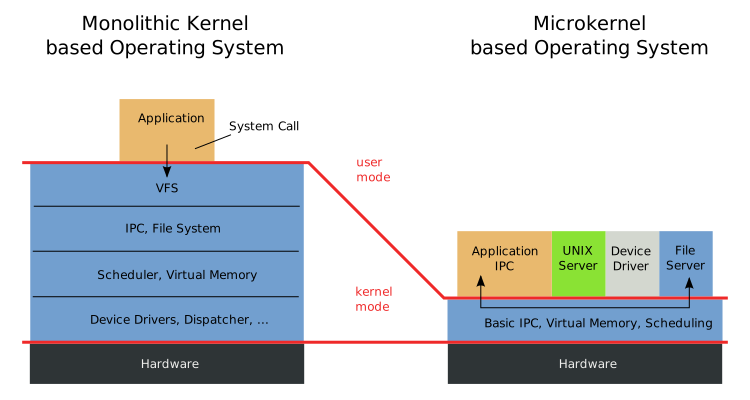
Most people are probably familiar with a traditional UNIX kernel design, like Linux or a *BSD kernel, which follows a monolithic design. Those traditional kernels have lots of code in kernel land, running with full privledges: filesystems, TCP/IP stack, device drivers, VPNs, etc. These kernels have the advantage in speed but are less secure.
In contrast, the GNU Hurd uses a microkernel design with seperate userspace processes in different address spaces. With the microkernel design comes several advantages. Many of the typical "kernel features" are in the Hurd's userspace. Standard debugging tools like gdb just work on them. Regular uses can start, start, and inspect kernel services. These components can be written in languages other than C or rust, like perl, lisp, haskel, etc.!
While we believe that the Hurd is one of the better microkernel operating systems, there are a few others that exist: Genode, Redox OS, Helen OS, and others.